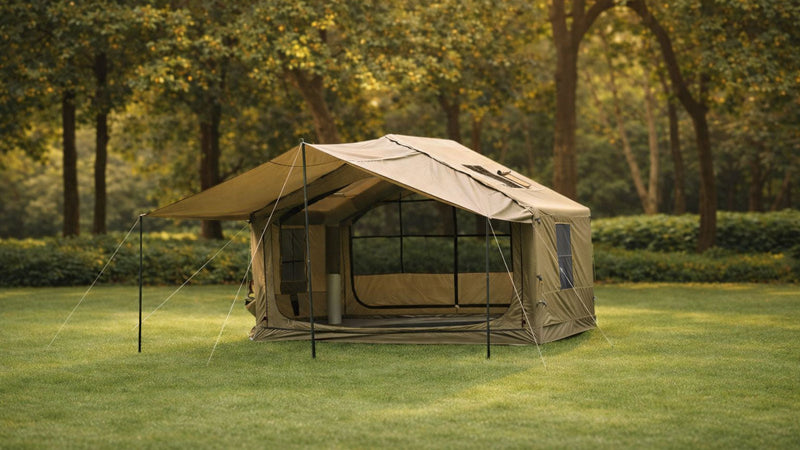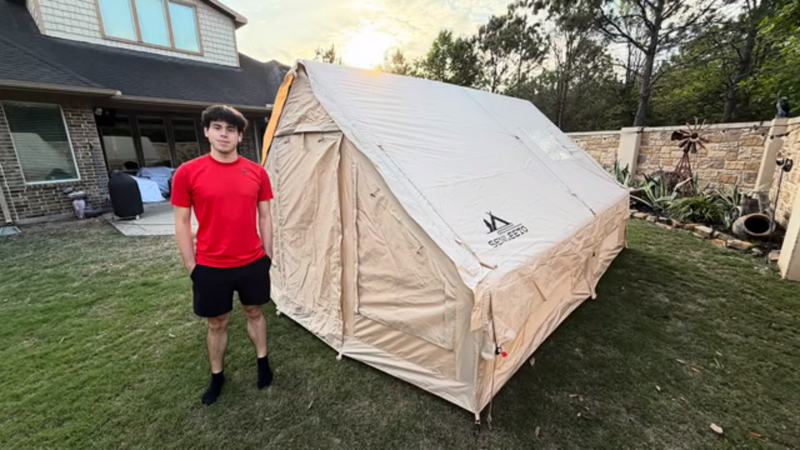

Short answer: If you camp with kids, a partner, or anyone who complains about sleeping on the ground in a hot nylon dome, an inflatable camping tent is absolutely worth it — especially one with blackout tech and walk-in headroom. Here's what to know before you buy.
Last summer I watched a family of five spend 45 minutes untangling aluminum poles at the campsite next to me. Their kids were bored, the adults were sweating, and by the time the tent was up, nobody was in the mood for the hike they'd planned.
That's exactly the problem inflatable camping tents solve. And honestly? Once you've set one up in under five minutes, going back to poles feels ridiculous.
This guide breaks down everything you need to know — how inflatable tents actually work, what to look for, how they compare to traditional setups, and which scenarios they're genuinely the best option for.
How Inflatable Camping Tents Work (And Why Poles Are Becoming Obsolete)
Traditional tents use fiberglass or aluminum poles threaded through fabric sleeves. They work — until a pole snaps on day two of a trip, or you realize you left one segment at home.
Inflatable tents replace those poles with air beams: thick PVC tubes sewn into the tent structure itself. You pump them up with a hand pump or electric pump, the beams stiffen, and the tent stands on its own. No threading, no assembly, no swearing.
The beams on quality tents — like the 5.9-inch integrated PVC beams on the Senleeto Grand Lodge — are thick enough to hold their shape in wind and flex slightly instead of snapping. That flexibility is actually an advantage in gusty conditions.
Setup time: typically 5 to 10 minutes for a family-size inflatable tent. Strike time: similar, or faster if you use the quick-release valves. That's it.
Who Should Actually Buy an Inflatable Tent?
Not everyone needs one, so let's be honest about who this is for:
- Families with young kids — Fast setup means you're not fighting gear while toddlers wander. Walk-in height means you can change them standing up.
- Glampers and weekend warriors — If campsite comfort matters more than ultralight weight, the cabin-style space changes everything.
- Festival campers — Distinctive color (hello, purple), fast setup, and enough room for cots and gear.
- Hot-weather campers — Blackout fabric and UV blocking make a real difference when you're camping in Florida in July.
- Winter glamping — If your tent has a stove jack, you can run a wood-burning stove inside safely. Game-changer for late fall hunting trips.
Who shouldn't buy one: ultralight backpackers, anyone covering miles on foot. These tents are car-camping tools — they're heavier and bulkier than a 2-person backpacking shelter, and they're not meant to be anything else.
Inflatable vs. Traditional Pole Tent: Honest Comparison
| Feature | Inflatable Tent | Traditional Pole Tent |
|---|---|---|
| Setup time (family size) | 5–10 min | 20–45 min |
| Failure risk | Slow leak (manageable) | Broken pole (trip-ending) |
| Headroom | Typically 6–7 ft center | Varies, often cramped |
| Wind performance | Good (beams flex) | Good (rigid poles) |
| Weight | Heavier | Lighter |
| Pack size | Larger | More compact |
| Blackout options | Available on quality models | Rare |
| Stove jack options | Available on quality models | Rare |
| Best for | Car camping, glamping | Backpacking, light travel |
5 Things to Check Before Buying Any Inflatable Camping Tent
1. Air Beam Thickness and Material
This is the main structural element — don't skimp here. Thin-walled beams lose pressure faster and are more prone to damage. Look for integrated PVC beams at least 5 inches in diameter. The Senleeto Grand Lodge uses 5.9-inch thickened beams that hold pressure well even in temperature swings overnight.
2. Interior Height
A "large" tent is useless if you're still crouching. If you're 6 feet tall, you need at least 78 to 83 inches of center height. The Grand Lodge clocks in at 83 inches — full adults can stand, get dressed, and move around comfortably.
3. Blackout vs. Standard Fabric
Regular camping tent fabric turns into a glowing lantern at 6 AM. If you have kids, or you just want to sleep past sunrise, look for tents with a blackout coating. The Black Glue Sun Protection Coating on the Senleeto isn't just marketing — it blocks light and meaningfully reduces heat buildup inside.
4. Seasonal Features
An AC port seems like a luxury until you're camping in August heat. A stove jack seems optional until you're on a late October trip. If you want to get real use out of your tent year-round, these are worth having built in. Adding them after the fact isn't really possible.
5. Footprint and Capacity
Tent capacity claims are almost always optimistic. A tent listed for 8–10 people will comfortably sleep a family of 4–5 with space for gear. The 157" × 118" footprint of the Grand Lodge fits two queen air mattresses with room for a folding table or chairs — which is what actually makes camping feel comfortable.
Real Camping Scenarios: Where an Inflatable Tent Shines
Family Summer Camping (Lake, State Park, KOA)
This is the sweet spot. You've got a full car, tired kids, and you want to be set up before anyone melts down. Inflatable tents go up in one pump session. The blackout interior means kids nap in the afternoon and sleep past 7 AM. Enough said.
Glamping and Campsite Upgrades
Glamping isn't about roughing it less — it's about enjoying the outdoors more intentionally. A walk-in tent with real standing room, a cot or air mattress, a small table, and good lighting is genuinely pleasant. The purple colorway on the Grand Lodge isn't accidental: it's striking against a green forest or meadow backdrop and photographs well if that matters to you.
Music Festivals and Multi-Day Events
Fast setup, large interior, and easy to spot when you're walking back from the main stage at midnight. Practical benefit of the distinctive color: you will always find your tent.
Hot Weather Camping (Florida, Arizona, Texas summers)
Standard nylon tents become heat traps. The UV-blocking coating on blackout tents makes the interior noticeably cooler, and a built-in AC port means you can run a portable outdoor air conditioner if you really want comfort. This combo is the only reason some people camp in the South during summer.
Late Fall and Winter Glamping
This is underrated. With a stove jack, you can safely run a wood-burning tent stove inside, which makes a canvas-style inflatable tent genuinely cozy in below-freezing conditions. Think: hot coffee, snow outside, warm inside — that's a trip worth taking. The Grand Lodge's stove jack is designed for exactly this setup.
Senleeto Grand Lodge Purple Inflatable Tent: Key Specs
The purple colorway is new and the first batch is already in transit to US warehouses. This isn't a tent that's been sitting in a discount bin — it's a pre-release that's generating real interest, and quantities from the first shipment will be limited.
🟣 Pre-Order Is Open Now
Lock in your Grand Lodge before the first batch sells out. Ships to US addresses.
Pre-Order the Purple Grand Lodge →Setup Guide: How to Set Up an Inflatable Camping Tent
First-timers always overthink this. Here's the actual process:
- Choose your site and clear any sticks or rocks from the footprint area.
- Lay the tent flat and unfold it fully. Orient the door the way you want it.
- Stake the four corners into the ground first — this anchors the tent while you inflate.
- Attach the pump to the valve (or use your own electric pump for faster results).
- Inflate until firm. The beams should feel rigid with slight give — don't over-inflate.
- Stake the guy lines for wind stability, especially in exposed locations.
- Done. Move your gear in.
To pack up: open the quick-release valves, fold toward the valves to push air out, roll toward the bag. Takes about the same time as setup.
Frequently Asked Questions
Yes, for car camping use. Quality inflatable tents use reinforced PVC air beams that resist punctures better than fiberglass poles resist breaking. The fabric is typically thicker than ultralight backpacking tents. If you get a small puncture in a beam, you can patch it — similar to a sleeping pad — and it won't ruin your trip the way a broken pole will.
Yes. Properly staked inflatable tents with guy lines perform well in wind because the beams flex without snapping. For rain, look for tents with welded seams and a high waterproof rating (3000mm+ hydrostatic head is the standard to look for). Most quality inflatable glamping tents are rated for 3-season use with appropriate staking.
With the included pump, plan for about 5–8 minutes from bag to standing. With a faster electric pump, it can be under 5 minutes. Compare that to 30–45 minutes for a large pole tent — especially if you're doing it alone.
If you camp in summer or have young kids: absolutely. Sunrise hits at 5:30–6:00 AM in June and July, and a standard tent turns into a sauna by 7 AM. Blackout coating keeps the interior dark and noticeably cooler. It's not just comfort — it's the difference between a family who had a good trip and a family who drove home exhausted.
Only if the tent has a built-in stove jack — a fire-resistant vent specifically designed for stovepipe clearance. Never try to cut or improvise one. The Senleeto Grand Lodge has this built in, which makes it suitable for late fall and winter camping with a small tent stove. Always follow stove safety guidelines and keep a vent cracked for airflow.
Practically speaking: comfort and setup time. Glamping prioritizes a comfortable basecamp — a tent you can stand up in, sleep comfortably in, and return to after a day hiking or kayaking. It's not about being indoors. It's about spending more time enjoying where you are and less time fighting your gear.
The first batch is currently en route to US warehouses. Pre-orders placed now are guaranteed from the first shipment. Given how fast new colorways tend to move, pre-ordering is the only reliable way to secure one.
Final Verdict
If you're car camping with a family, hosting a group at a campsite, or want a shelter that works comfortably across multiple seasons — an inflatable tent is a genuine upgrade over a traditional pole tent. The setup alone is worth it. Add blackout fabric, real standing height, and 4-season features like an AC port and stove jack, and you've got something that covers a lot of ground.
The Senleeto Grand Lodge Purple is designed for exactly this kind of use. It's a pre-release, quantities are limited, and the purple colorway won't last long in the US market.
Ready to upgrade your campsite?
Pre-Order the Senleeto Grand Lodge Purple →Where would you take this tent first — lake trip, music festival, or winter glamping? Drop it in the comments below.