
Some of the best proof of what a tent can do doesn't come from us — it comes from the customers who take it places we've only dreamed of. Recently, one of them took a Senleeto inflatable tent across the Tibetan Plateau. Here's what the trip showed us.
The setup is simple: a multi-vehicle overland convoy, days on dirt roads through some of the highest country in the world, and one Senleeto 14' × 10' Inflatable A-Frame Tent riding along for camp every night. Glacial lakes, snow-capped peaks, sudden weather, and a night sky so clear it almost looks unreal.
Here's what their trip reveals about taking an inflatable tent into big, remote country — and why more overlanders and high-altitude campers are giving one a try.
 Real customer campsite — the Senleeto A-frame tent at a high-altitude lake on the Tibetan Plateau.
The Trip at a Glance
- Tent: Senleeto 14' × 10' Inflatable A-Frame Tent (beige)
- Where: Tibetan Plateau — glacial lakes, snow-capped peaks, open grasslands
- Format: Multi-vehicle overland convoy with 4x4s and off-road trailers
- Conditions: Strong wind, sudden weather shifts, cold nights, clear high-altitude skies
- Setup: Solo, beside the vehicle

The actual campsite — at the edge of a glacial lake, snow peaks across the water.
5 Things This Trip Showed Us
An inflatable tent is one of the easiest ways to pitch at altitude
At altitude, every minute of setup matters — daylight fades fast and the air is thin. An inflatable tent removes the hardest part of pitching camp: there are no poles to thread and no rigid frame to wrestle with cold fingers. Connect a pump, inflate the air beams, stake it out, and the structure is standing.
The A-frame shape earns its place on an overland trip
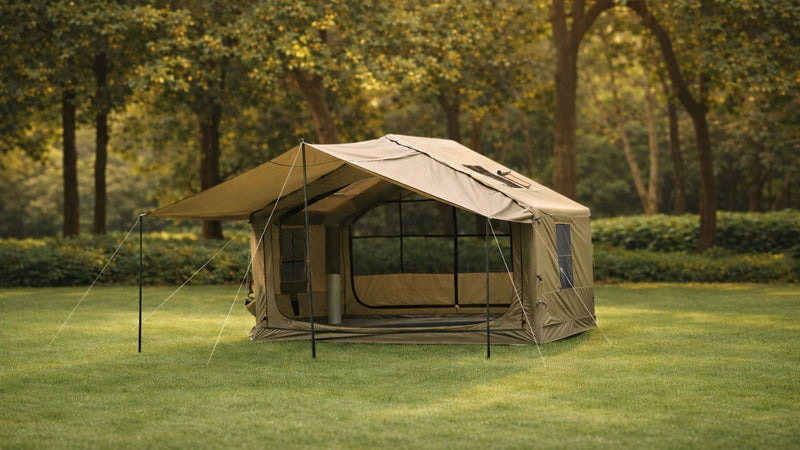
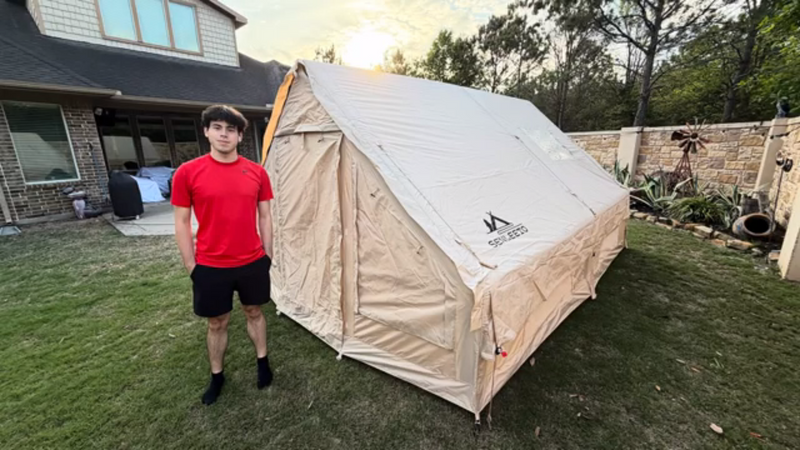
The steep A-frame gives real headroom — 100 inches at the peak — while the 136 sq ft floor gives a small group and their gear room to spread out, without the cramped feeling of a traditional dome.

A steep A-frame front and a long floor — headroom where you stand, floor space where you sleep.
Air beams handle plateau wind differently than rigid poles
The Tibetan Plateau is known for sudden weather and steady wind. Instead of resisting a strong gust, inflated air beams flex and then return to shape. The low A-frame profile, taut guy-lines, and the A-frame's own rainfly all work together to keep wind and weather on the outside.

Low profile, firm staking, dramatic sky — built to settle in for the night.
At night, it turns into a lantern
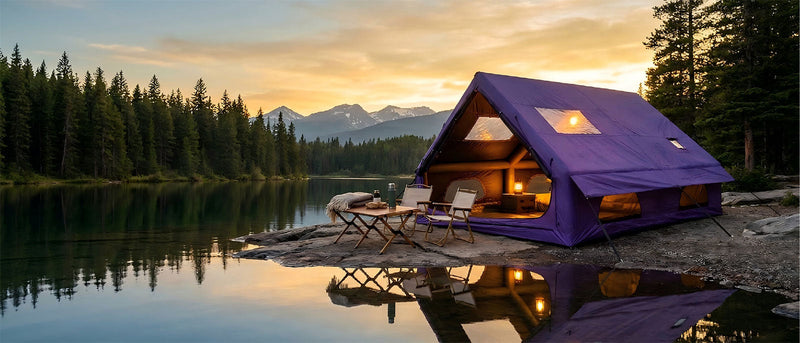
When the sun drops, the campsite changes completely. With a light on inside, the tent glows softly against the dark. Through the side windows and the skylight, you can watch the night sky without leaving your sleeping bag.
A warm-lit tent and a sky full of stars — the reason people drive this far.

The tent reflected in the lake under a full field of stars.
It fits the overland routine
This trip was not a single tent in the wild — it was a full overland convoy: 4x4s and off-road trailers strung out along the shoreline at sunrise. The Senleeto inflatable A-frame tent fits naturally into that setup. It packs down for transport, pitches quickly next to a vehicle, and creates a living-and-sleeping space soon after you reach camp.

Vehicle alongside, tent up quickly — a basecamp wherever the road ends.
Inflatable Tent vs Pole Tent for Trips Like This
Both work. Here's how they actually compare for high-altitude, windy, remote camping:
Familiar and widely available. Setup requires threading and tensioning poles — slower, harder in cold weather or wind, and usually a two-person job. Rigid frame is strong but doesn't flex with gusts.
Faster setup — about 5–10 minutes with a pump, single-person friendly. Air beams flex with wind instead of fighting it. Heavier to pack, but pairs naturally with any vehicle-based trip.
Tips Before Taking Any Tent to High Altitude
Whether you go inflatable or traditional, the plateau punishes shortcuts. A few things worth getting right:
- Underestimating the wind — high-altitude wind is constant. Stake every corner and every guy-line, even on a calm-looking afternoon. Conditions change fast.
- Pitching on bare wet ground — high-altitude soil holds moisture. Pick a slight rise with drainage rather than the flattest-looking patch.
- Skipping a footprint or groundsheet — rocky or frosted ground will wear the base. Always protect the floor on this kind of terrain.
- Trusting the weather window — high-altitude skies turn fast. Set up the tent as if a storm could arrive overnight, every night.
- Forgetting the altitude itself — at 4,000 meters and above, even simple tasks feel harder. Build extra time into every step of camp.
Inflatable Tents for Mountain & Overland Camping: FAQ
Are inflatable tents good for windy or mountain conditions?
They handle it well when they're set up right. The air beams of an inflatable tent flex under gusts and return to shape, while a low profile and properly tensioned guy-lines help the tent shed wind. Staking out every point firmly is the key to stable performance in exposed terrain.
How long does it take to set up an inflatable tent?
Most campers have the Senleeto A-frame tent inflated and standing in about 5–10 minutes with the included hand pump — significantly faster than threading poles on a traditional tent. With an electric pump it's faster still.
Can you use an inflatable tent for overlanding and car camping?
Absolutely. Inflatable tents pack down for transport and pitch quickly beside a vehicle, which makes them a strong fit for overland trips, road trips, and basecamp-style car camping.
Is an inflatable tent durable enough for rough terrain?
The Senleeto A-frame uses PVC air beams and a 420D Oxford shell built for repeated outdoor use. As with any tent, using a footprint or groundsheet helps protect the base on rocky sites.
What about altitude — does inflation work normally up high?
Yes. Inflate the beams to 5.5–6 psi, until they're firm and the roof is taut — same as you would at sea level. If the tent feels softer the morning after a cold night (cold air contracts), give the beams a few top-up pumps.
Does the Senleeto A-frame tent come with a warranty?
Yes — every Senleeto tent is covered by a 1-year limited warranty.

Last light over the lake — and you don't have to drive home tonight.


Ready for Your Own Starry-Night Campsite?
You don't need the Tibetan Plateau to enjoy a tent like this — any quiet lakeshore, forest clearing, or open campground will do. Fast setup, a flexible air-beam structure, and room to actually live in camp.
Free US shipping on in-stock tents. Covered by a 1-year limited warranty.
Shop the 14' × 10' A-Frame Tent →Photos shared by a Senleeto customer from an overland trip across the Tibetan Plateau. Always camp responsibly and follow local regulations and Leave No Trace principles.