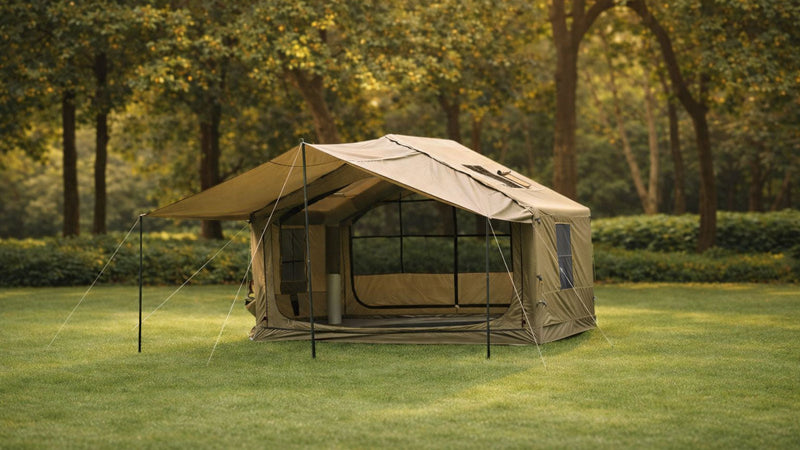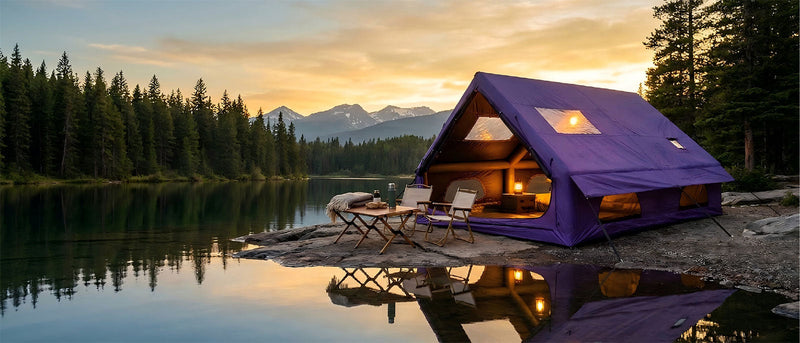

Bottom line: For car camping, families, and anyone who values setup speed and interior space, inflatable tents win. For ultralight backpacking or budget camping, traditional pole tents still make sense. The right answer depends on how you actually camp — here's the full breakdown.
The inflatable tent market has grown fast over the past few years, and for good reason. But a lot of the content out there is either vague marketing copy ("revolutionary air beam technology!") or the opposite extreme — dismissive gear snobs who've never actually camped in one.
This is an honest comparison. Both tent types have real strengths, real weaknesses, and specific situations where each one makes more sense. If you're deciding between them, here's what actually matters.
The Core Difference: How Each Tent Stays Standing
🏕️ Traditional Pole Tent
- Aluminum or fiberglass poles thread through fabric sleeves
- Rigid structure — holds shape under load
- Poles can snap or bend under extreme stress
- Requires assembly every time
- Replaceable pole segments available
💨 Inflatable Air Tent
- Thick PVC or TPU air beams built into tent structure
- Flexible — beams flex with wind and return to shape
- Slow deflation if punctured (patchable, not trip-ending)
- Pump up and it builds itself
- Repair patches handle most damage
This structural difference is what drives most of the practical trade-offs below.
Head-to-Head Comparison
| Category | Pole Tent | Inflatable Air Tent |
|---|---|---|
| Setup time (family size) | 20–45 min | 5–10 min ✓ |
| Solo setup | Difficult for large tents | Manageable alone ✓ |
| Wind resistance | Good (rigid) | Good (flexible beams) ✓ |
| Failure mode | Snapped pole = trip ruined | Slow leak = patchable ✓ |
| Interior headroom | Often sloped, cramped | Vertical walls, full height ✓ |
| Blackout/AC/stove options | Rare | Available on quality models ✓ |
| Weight | Lighter ✓ | Heavier |
| Pack size | More compact ✓ | Bulkier |
| Price (family size) | Lower entry price ✓ | Higher upfront cost |
| Best use case | Backpacking, budget camping | Car camping, glamping, families |
Setup: The Difference Is Bigger Than You Think
On paper, 5 minutes vs 30 minutes doesn't sound dramatic. But think about when that gap actually hits you.
You've driven 3–4 hours. You've got kids in the back who've been asking "are we there yet" since hour one. You arrive at the campsite at 6 PM with maybe 90 minutes of usable daylight left. In that moment, the difference between a 5-minute setup and a 30-minute one is the difference between making dinner at the campsite or scrambling in the dark.
Or the reverse: you're packing up on Sunday morning and you want to hit one more trail before driving home. Every minute of breakdown time is trail time you don't get back.
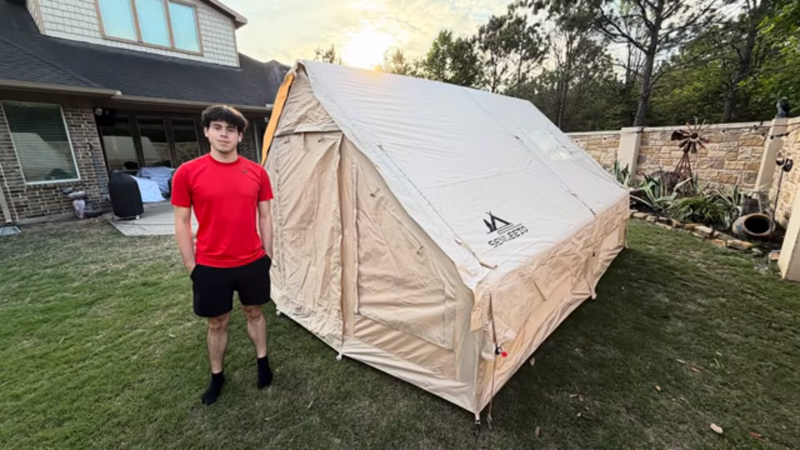
The actual Senleeto Grand Lodge process: unroll, stake four corners, connect pump, inflate. The tent builds itself while you're staking guy lines. That's it. For a shelter this size — 157 × 118 inches, 83-inch center height — that speed is genuinely unusual.
💡 Practical note: An electric pump speeds things up significantly. A 12V car pump or rechargeable pump gets a large inflatable tent from flat to standing in 3–4 minutes. The included hand pump works, but if you camp regularly, a battery pump is worth having.
Wind Performance: The "Will It Pop?" Question
This is the most common concern from first-time inflatable tent buyers, and the fear is mostly misplaced.
Here's what actually happens in high wind with a pole tent: aluminum poles hold rigid. Above a certain wind speed, the force has to go somewhere — it goes into the fabric at the stress points where the pole meets the sleeve. That's where traditional tents fail. Tear at a pole pocket = significant damage, often unrepairable in the field.
Air beams work differently. They flex with the wind — the tent wall moves with the gust rather than fighting it. When the gust passes, the beam returns to shape. This flex-and-return behavior actually handles gusty, variable wind better than a rigid structure does.
The key is proper staking. An inflatable tent with guy lines tensioned in four directions in gusty conditions will outperform a pole tent that's only corner-staked. Stakes should go at 45 degrees away from the tent, not straight down — this matters especially in soft or wet ground.
What inflatable beams don't do well: sustained extreme pressure without guy lines. In a real storm — 50+ mph sustained — you want everything staked and guyed regardless of tent type.
Space and Comfort: Where Inflatable Tents Have a Clear Advantage
Traditional dome tents are shaped by their poles, which means sloping walls that reduce usable floor space significantly. The footprint says 10×10, but the livable area where you can actually stand or sit up comfortably is much smaller.
Inflatable tent designs aren't constrained the same way. Air beams can support vertical walls, which means the floor area you measure is close to the floor area you actually use.
The Grand Lodge footprint — 157 × 118 inches — fits two queen air mattresses side by side with space left over. With 83-inch (nearly 7 feet) of center height, adults over 6 feet can stand fully upright, which changes the entire feel of a camping trip. Getting dressed, managing gear, keeping kids organized — all of it is just easier when you're not stooped over.
Features that are rare on pole tents but standard on quality inflatable models:
- Blackout coating — keeps the interior dark past sunrise, meaningful for summer camping with kids
- AC port — connects to a portable outdoor air conditioner for summer use
- Stove jack — fire-resistant vent for safely running a wood-burning tent stove in winter
- Skylights — transparent roof panels for stargazing without leaving the tent
Who Should Buy an Inflatable Tent?
✅ Families with young kids
One adult can fully set up the tent while the other handles kids, food, or gear. The walk-in height means managing a toddler inside is actually doable. Blackout fabric is a real benefit when kids wake up at sunrise.
✅ Car campers and weekend warriors
If you're driving to the campsite, weight isn't a constraint. You're optimizing for setup speed, interior comfort, and ease of use — all areas where inflatable tents win.
✅ Glampers and festival campers
Large interior, distinctive look, fast setup. Festivals especially: you're moving gear in, setting up quickly, and want a space that feels like more than a nylon box.
✅ Four-season car campers
With an AC port for summer and a stove jack for winter, a quality inflatable tent covers more conditions than most pole tents. The Grand Lodge is used year-round by people who camp in both desert heat and mountain cold.
❌ Ultralight backpackers
If you're covering miles on foot and every ounce counts, inflatable tents aren't for you. A quality 2-person backpacking tent at 3–4 lbs beats a 25+ lb inflatable cabin for this use case.
❌ Strict budget buyers
The entry price for a quality inflatable tent is higher than a comparable pole tent. If budget is the primary constraint, a mid-range pole tent gets you camping. The inflatable is an upgrade, not a necessity.
The Failure Mode Question: Leaks vs. Snapped Poles
Both types of tents fail. The question is how.
A snapped pole mid-trip is a serious problem. Most campers don't carry replacement pole segments, splints are a temporary fix, and a snapped pole can tear fabric when it goes. It's the kind of failure that ends a camping trip early.
An air beam leak is almost always slow. A pinhole puncture drops pressure over hours, not seconds — you notice it when the tent feels softer than usual in the morning, not when the structure collapses. The repair is a patch kit (similar to a sleeping pad repair), applied to a dry surface, and it holds. Most inflatable tent brands include a repair kit, and the patches are widely available.
Over multiple seasons of regular use, slow leaks are more common than catastrophic beam failures. For this reason, a lot of experienced car campers consider inflatable tents more field-reliable than pole tents, not less.
Shipping and Availability: US Stock Matters
One practical detail worth mentioning: lead time. A lot of inflatable tents in this size and quality range ship direct from overseas, which means 3–6 week waits and difficult returns if something's wrong.
Senleeto stocks in US warehouses in New Jersey and California. That means standard domestic shipping times, easier returns, and no customs delays. If you're planning a specific trip date, this actually matters.
Ready to ditch the poles?
Ships from US warehouses in NJ & CA. Free shipping, standard domestic delivery.
Shop the Senleeto Inflatable Tent Collection →Frequently Asked Questions
For regular car campers, yes — especially families. The time saved on setup over multiple trips adds up quickly, and the interior comfort is a genuine upgrade. The higher upfront cost is offset by durability (5–10 seasons with proper care) and the fact that you're actually more likely to use a tent you enjoy setting up.
Better than most people expect. Air beams flex rather than snap, which handles gusty conditions well. Properly staked and guyed, an inflatable tent in 30–40 mph gusts is stable. The key is staking all guy lines before the wind picks up, not after.
The tent deflates slowly — over hours, not instantly. You'll notice it as a pressure drop, not a sudden collapse. Patch kits (included with Senleeto tents) fix small punctures quickly. Larger damage can be repaired with PVC patch tape available at most camping retailers.
Yes — this is actually one of the main advantages over large pole tents, which often require two people to thread poles through sleeves while keeping the structure from collapsing. With an inflatable tent, you stake the corners first (which anchors everything), then pump. The tent builds itself.
About 10–15 minutes once you have the hang of it. Open the quick-release valves, fold the tent toward the valves to push air out, roll toward the bag. The first time takes longer while you figure out the folding pattern — after that it's straightforward.
A tent rated 6–8 person gives a family of 4 comfortable space with room for gear. A tent rated 8–10 (like the Senleeto Grand Lodge) gives you dedicated sleeping and living areas — two queen air mattresses plus space for a table and chairs. If you camp with dogs or a lot of gear, size up.
Yes — Senleeto tents include a high-capacity hand pump. For faster setup, a 12V electric pump or rechargeable pump significantly cuts inflation time. This is an optional upgrade, not a requirement.
Made the switch from poles to an air tent? Tell us about your first trip with it in the comments.