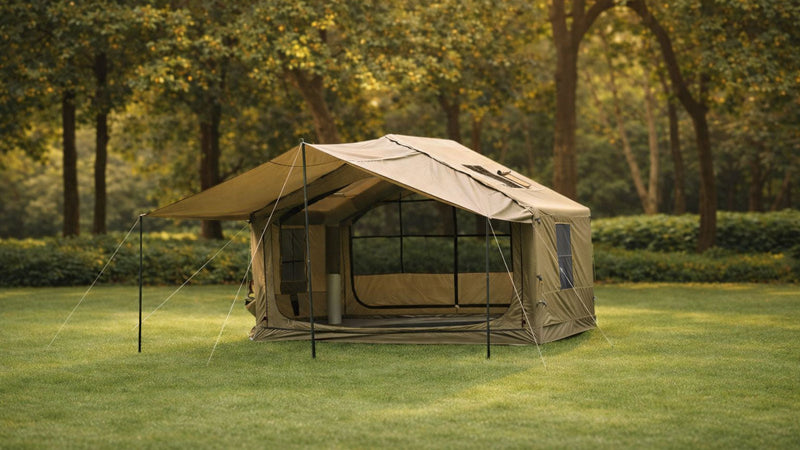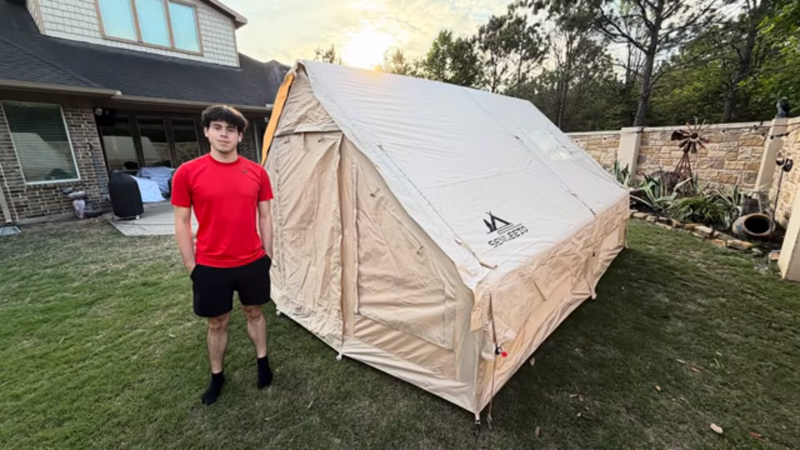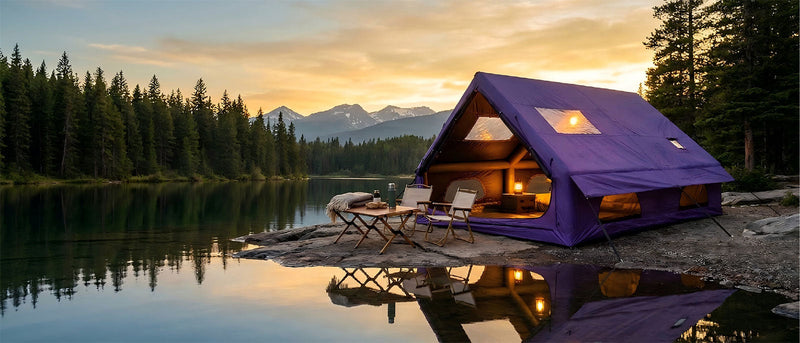

Most people buy an inflatable tent for the fast setup. Then they realize the walk-in space, all-weather features, and portability open up a bunch of uses they hadn't thought about. Here are seven of them — from obvious to genuinely surprising.
An inflatable camping tent is a different category of outdoor shelter than a traditional nylon dome. The vertical walls, full standing height, AC ports, stove jacks, and blackout fabric aren't just comfort upgrades — they're features that make a tent usable in situations where a standard shelter simply isn't.
These aren't gimmicks. Each of these setups has been done by actual Senleeto customers. Some are weekend warrior stuff; a couple require a little more planning. All of them are worth knowing about before your next trip.
1 The Outdoor Cinema Setup
This one sounds like overkill until you actually do it at a campsite and half the campground shows up.
The flat, vertical sidewall of a large inflatable tent — or the detachable canopy on models like the Horizon Suite — works as a projection surface. You don't need a screen. Set up a portable projector about 10–12 feet back, point it at the tent wall, and you've got a display that's 80+ inches diagonal in most setups. Pair it with a Bluetooth speaker and some camp chairs and you're running a better movie night than most home theater setups.
What you need:
- Portable projector (Anker Nebula or similar — 500+ lumens for outdoor use)
- Bluetooth speaker (waterproof is worth it outdoors)
- Laptop or streaming stick + phone hotspot
- String lights for ambient lighting (keep them dim so they don't wash out the projection)
- Camp chairs or a blanket setup
💡 The Senleeto Horizon Suite has a dedicated flat canopy panel specifically designed for this. It also has a detachable awning that creates a covered outdoor seating area — set up the chairs under the awning and project onto the tent wall.
Best in late summer and fall when nights get dark earlier. Start the movie around 8:30–9 PM when ambient light is fully down for the best image quality.
2 Winter Hot Tent Camping
Hot tent camping — running a wood-burning stove inside a tent — has gone mainstream in the last few years, mostly because people discovered it makes winter camping genuinely comfortable instead of just survivable.
The setup requires a tent with a built-in stove jack: a fire-resistant vent specifically designed for a stovepipe to exit safely. You cannot improvise this with a standard tent — cutting fabric destroys the waterproofing and creates a fire risk. It has to be factory-built into the tent.
The Senleeto Forest Air Cabin and Grand Lodge both have stove jacks. Here's how the setup works:
- Set up the tent and stake all guy lines for winter stability
- Position the stove (titanium tent stoves are lighter; cast iron holds heat longer) away from the tent walls and any fabric
- Thread the stovepipe through the stove jack — the fire-resistant material handles the heat differential
- Keep a window or vent cracked for CO safety — always, no exceptions
- Run the stove for 30–45 minutes to heat the interior, then let it burn down to coals overnight
⚠️ CO safety is non-negotiable. Always keep at least one vent cracked when running any stove inside any enclosed shelter. A battery-operated CO detector costs $20 and should be standard equipment for any hot tent setup. Don't skip this.
Done right: you're sitting in a t-shirt watching snow fall through the skylight. This is why people who try hot tent camping once rarely go back to summer-only camping.
💡 The 600D Oxford fabric on the Forest Air Cabin is heavier and retains heat better than lighter fabrics. Worth noting if winter camping is a primary use case.
3 Summer Air-Conditioned Base Camp
This is the feature that gets the most disbelief until people try it: camping in Florida in August and actually sleeping well.
The AC port on the Grand Lodge and Halo Dome is a sealed, reinforced opening sized for a portable outdoor air conditioner. You run the unit outside the tent, route the vent through the port, and seal around it. The tent interior cools down like a room — not "bearable," actually cool.
Combined with the blackout coating that blocks heat from sunlight during the day, this setup works even in the Southeast US summer heat that makes traditional camping miserable.
What you need:
- Portable outdoor AC unit (Zero Breeze Mark 2 or EcoFlow Wave are the two most common for camping use)
- Power source — these draw significant wattage, so you need either a campsite with power hookup or a large capacity power station (1,000Wh+)
- The AC port on your tent (cannot be added to a tent that doesn't have one)
This setup is especially useful at RV parks and campgrounds with electrical hookups, music festivals with power access, or for anyone running a large battery station. It's not for remote wilderness camping, but for car camping in hot climates it's a legitimate game-changer.
4 The Backyard Glamping Setup
This sounds less adventurous than it is. A large inflatable tent in your backyard is a genuinely different space — not just a tent, more like a temporary room that happens to be outside.
Use cases people actually do this for: kids' sleepovers (they love it), hosting outdoor movie nights or game nights with weather backup, setting up a weekend workspace when you want to be outside but need shelter from sun or light rain, or just as a transition space for a party with young kids who need somewhere contained.
The 5-minute setup and breakdown means this isn't a production — you can put it up Friday afternoon and take it down Sunday without it being an event. That's the difference from a traditional tent where the setup effort makes it feel like only worth doing for an overnight.
💡 With a power extension cord and the AC port, a backyard glamping setup in summer is legitimately comfortable in climates that would otherwise make outdoor entertaining impractical in July and August.
5 Festival Base Camp
Music festivals are brutal on camping gear. Three days of high traffic, weather exposure, and people navigating in the dark — most tents don't survive it cleanly.
A large inflatable tent handles festival camping better than most alternatives for a few reasons: setup is fast (you arrive tired and don't want to fight poles), the walk-in space handles a group organizing gear, and the distinctive color means you actually find your tent when walking back at midnight from the main stage. A purple or yellow inflatable tent is visible from 50 yards. A tan dome tent is invisible in a sea of tan dome tents.
For a group of 4–6 friends at a festival, one large tent beats multiple small tents for gear security, meeting point reliability, and morning logistics. The 157 × 118 inch Grand Lodge fits 6 sleeping bags with space for bags and shoes — or 4 people with air mattresses in actual comfort.
6 Hunt Camp or Fishing Base
Hunters and serious anglers have been early adopters of inflatable tents, specifically because of the stove jack and the faster pack/unpack compared to large canvas wall tents.
A traditional canvas wall tent for a hunting camp is heavy, takes significant time to set up, and requires a full set of poles and stakes to transport. An inflatable tent in the same interior volume category weighs significantly less and sets up in under 10 minutes — which matters when you're also hauling in gear, food, and equipment.
The stove jack for wood heat is the critical feature here. Late October and November temperatures in most hunting regions in the US and Canada require real heat — not just a sleeping bag, actual interior warmth. A small wood stove running for an hour before bed and banked overnight keeps the interior comfortable through a cold night.
💡 For hunting camp use specifically, the 600D Oxford fabric on the Forest Air Cabin is better than lighter fabrics — more puncture-resistant against tree branches and brush, and the heavier material retains heat better with the stove running.
7 Stargazing Camp
This one is specific to tents with skylight panels — transparent roof sections that let you see the sky from inside.
The Grand Lodge skylights cover a significant portion of the roof. On a clear night, lying on an air mattress and watching the Milky Way through the roof of your tent — no neck strain, no mosquitoes, no dew — is a legitimately great experience that most camping setups can't deliver.
This works best at dark sky sites: national parks, BLM land, rural campgrounds away from city light pollution. The blackout sides of the tent block ambient campsite light while the skylights stay clear overhead.
In winter, a slow-burning stove keeping the interior around 60°F while snow falls and stars are visible through the skylights — this is the kind of trip people talk about for years.
Accessories That Unlock Most of These Setups
A few pieces of gear that come up repeatedly across these use cases:
- Electric pump (12V or rechargeable): Gets setup time from 8 minutes to 3–4 minutes. If you're setting up and breaking down frequently, this pays for itself fast.
- Portable power station (500–1,000Wh): Powers projectors, speakers, fans, and smaller AC units without a campsite hookup.
- Titanium tent stove: Lighter than cast iron for transport; heats effectively for tents up to the Grand Lodge size. Includes pipe sections and spark arrestor.
- CO detector: Non-optional for any hot tent setup. Battery-powered, $20, potentially life-saving.
- Groundsheet/footprint: Protects the floor fabric and adds a moisture barrier underneath. Cut it slightly smaller than the tent footprint so rain doesn't pool on it.
- LED strip lights: Transform the interior atmosphere for glamping setups. Warm white > cool white for camp vibes.
Which setup are you trying first?
All Senleeto tents ship from US warehouses in NJ & CA. Free shipping on all orders.
Shop the Full Senleeto Collection →Frequently Asked Questions
Yes — if the tent has a factory-built AC port. The port is a reinforced, sealed opening designed for a portable outdoor AC unit. You cannot safely or effectively cut your own into a tent. On models like the Senleeto Grand Lodge and Halo Dome that have this built in, a portable unit (like the EcoFlow Wave) brings the interior temperature down meaningfully even in hot climates. Power source is the main planning consideration — you need either a campsite hookup or a large capacity power station.
For a tent the size of the Grand Lodge (157 × 118 inches), a small-to-medium titanium tent stove is appropriate. Look for models with 2–4 pipe sections and a spark arrestor on the chimney end. The stove should sit at least 18 inches from tent walls on a non-flammable surface (most camp stoves come with a heat shield for the floor). Don't oversize — a small stove in a well-insulated tent heats effectively without risk of overheating.
More than most people expect. The 5-minute setup removes the friction that makes a traditional tent feel like too much work for a non-camping situation. Parents with young kids especially find it useful for sleepovers, outdoor movie nights, and as a covered play space that's not the house. It's a genuinely different space from your backyard, which has more value than it sounds.
Position the projector 10–15 feet from a flat vertical wall section of the tent. Darker-colored tent fabrics work better as screens than light colors (some brands make white projection surfaces specifically for this, but a light beige or gray tent wall works fine). Keep ambient lighting dim — string lights are fine, overhead camping lanterns will wash out the image. A 500-lumen projector works outdoors once it's fully dark; 1,000+ lumens if there's any ambient light competition.
Yes, and they're better for it than most people assume. Fast setup when you arrive exhausted, large interior for group gear storage, and a distinctive appearance that's easy to find. The main consideration is that large inflatable tents take up more footprint than small dome tents — check festival camping rules on site size before booking. Most festivals allow them; some have size restrictions in certain camping zones.
Which of these setups have you tried — or which one are you planning first? Drop it in the comments.