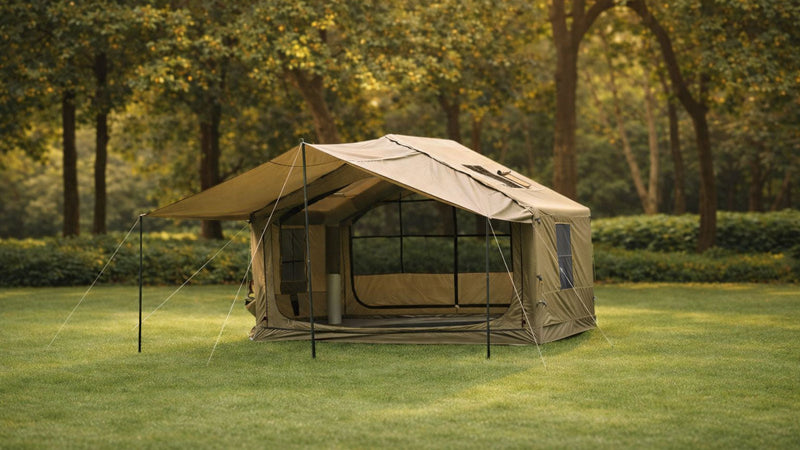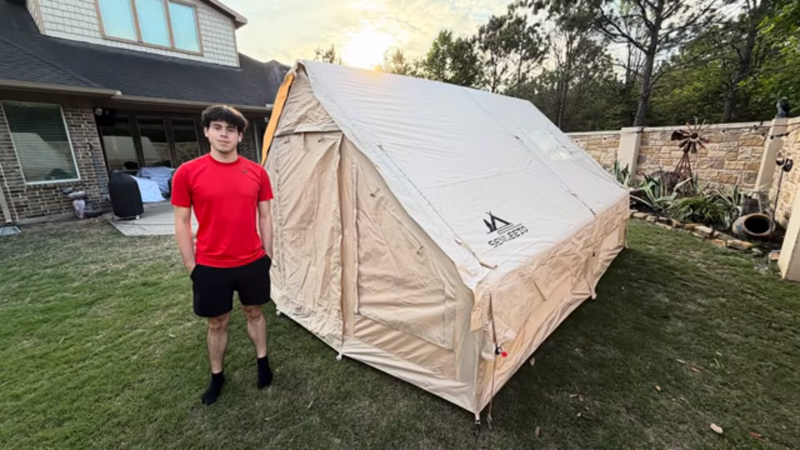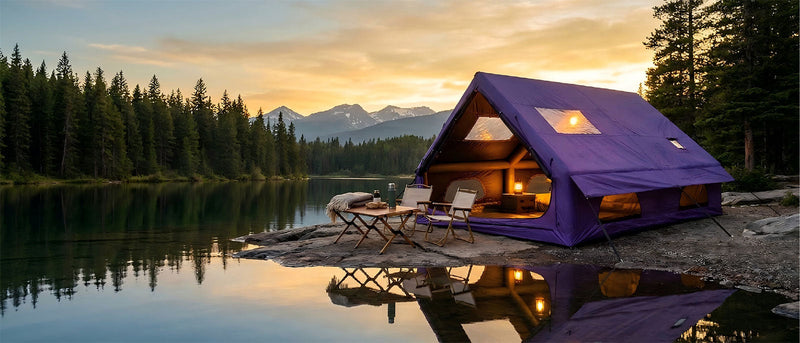

The short version: Focus on five things — floor size vs. actual capacity, center height, air beam thickness, waterproof rating, and whether it has the seasonal features you'll actually use. Most buyers get the first two right and ignore the rest. This guide covers all five.
Shopping for an inflatable tent is more confusing than it should be. Every brand lists their tent as "easy setup" and "premium quality." Capacity numbers are almost universally inflated. And the features that actually matter for your specific type of camping — blackout fabric, stove jacks, AC ports — aren't always easy to find in a spec sheet.
After years of making inflatable tents and hearing back from thousands of customers across the US, these are the questions that actually separate a good purchase from a regrettable one.
Step 1: Figure Out How You Actually Camp
Before looking at any specs, answer these three questions honestly. They'll cut your options in half immediately.
Where does your tent travel?
By car to a campsite: Weight and pack size don't matter much. Prioritize interior space, setup speed, and comfort features. This is where inflatable tents shine.
On foot for any distance: An inflatable family tent isn't for you. Look at ultralight backpacking shelters instead — this guide won't help you.
Who's sleeping in it?
Be specific. "Family of 4" means very different things depending on whether you have infants, teenagers, or adults. Two adults and a toddler need less floor space than two adults and two 12-year-olds who each want their own corner.
What seasons and conditions?
Summer only? You need good ventilation and UV protection. Winter camping? You need a stove jack. Hot climates? AC port matters. All four seasons with one tent? Make sure the tent is actually engineered for that — not just marketed that way.
Step 2: Size — The Capacity Lie You Need to Know About
Every tent manufacturer rates capacity optimistically. A tent listed as "8-person" assumes adults lying shoulder-to-shoulder with zero gear. Nobody actually camps that way.

Here's a more realistic guide:
| Tent Rating | Realistic Sleeping Capacity | Comfortable Use |
|---|---|---|
| 4-Person | 2–3 adults | Couple + minimal gear |
| 6-Person | 3–4 adults | Family of 3 with gear, or couple glamping |
| 8-Person | 4–5 adults | Family of 4 with two air mattresses + gear |
| 10-Person | 5–6 adults | Large family or group with living area |
⚠️ Watch out for floor area vs. usable floor area. Dome-style tents have sloping walls that reduce the space you can actually use. Square-footprint inflatable tents with vertical walls give you much closer to the listed floor area. Check whether the dimensions are measured at the base or at standing height.
For the Senleeto Grand Lodge (8–10 person rating), the 157" × 118" footprint comfortably fits two queen air mattresses side by side with walking space — that's what a real family of 4–5 actually needs.

Step 3: Center Height — The Feature Everyone Underestimates
You will use the inside of your tent more than you expect. Getting dressed, managing gear, entertaining kids on a rainy afternoon, changing a toddler — all of this is completely different in a tent where you can stand upright vs. one where you're crouched the whole time.
- Under 60 inches (5 ft): Crouch tent. Fine for sleeping, miserable for anything else.
- 60–72 inches: Most adults need to duck. Livable but not comfortable.
- 72–78 inches: Most adults can stand. Comfortable for families.
- 78–84 inches (6.5–7 ft): Full headroom for tall adults. This is what changes the camping experience.
The Senleeto Grand Lodge has 83-inch center height. Someone who's 6'2" can stand completely upright. This sounds like a small detail until you're on day three of a trip and you've been stooped over every time you need to do anything.

💡 Pro tip: If you're buying for a family, prioritize center height over floor area. A slightly smaller footprint with full standing height beats a larger tent where adults are hunching constantly.
Step 4: Air Beams — What the Specs Actually Mean
This is the core structural element of an inflatable tent, and it's where the most variation exists between budget and quality models.

1 Beam diameter
Thicker beams hold more pressure and maintain their shape better through temperature changes overnight. Look for 5 inches minimum on a family-size tent; 5.9 inches or more is what quality manufacturers use. Thin beams (3–4 inches) on large tents will feel noticeably soft by morning in cold weather.
2 Material: PVC vs TPU
PVC beams are heavier, less flexible in extreme cold, but widely available and patchable with standard repair kits. Most family camping inflatable tents use PVC — it's durable and cost-effective for car camping use.
TPU beams are lighter, more flexible at low temperatures, and more expensive. Better for backpacking-adjacent use where weight matters, or for consistent cold-weather camping.
For most car campers: PVC is fine. The weight difference is irrelevant when you're loading a car, not a pack.
3 Integrated vs. removable beams
Integrated beams are sewn into the tent structure and inflate as one unit. Removable beams can be taken out separately. Integrated is more convenient for setup and more structurally consistent. Removable makes drying easier if a beam gets wet inside. Most quality family tents use integrated — it's faster and the structural integrity is better.
4 Number of independent beams
Better tents have multiple beams with separate inflation points. If one beam develops a slow leak, the rest of the tent stays up. Single-chamber designs lose pressure across the whole structure at once. For family use, independent beams matter — they're the difference between a manageable morning problem and waking up in a collapsed tent.
Step 5: Fabric and Waterproofing
Hydrostatic Head Rating
This is the standard measure of waterproofing — how many millimeters of water pressure the fabric withstands before moisture penetrates.
- 1,500mm: Light rain only. Not suitable for sustained or heavy rain.
- 2,000mm: Decent for most camping conditions.
- 3,000mm+: What you want for reliable all-weather use.
Senleeto tents use 420D and 600D Oxford fabric. The "D" (denier) number refers to fabric thread thickness — higher denier means heavier, more puncture-resistant fabric. 420D is solid for most family camping; 600D is the step up for harder use.
Floor Waterproofing
The floor takes more abuse than any other part of the tent — abrasion from ground contact, weight from people and gear, moisture pressure from below. Look for floor fabric rated separately from the walls, ideally 5,000mm or higher. Always use a groundsheet underneath regardless of the floor rating.
Seam Sealing
Fabric can be waterproof; seams often aren't unless specifically sealed. Check that seams are either taped or factory-sealed. Unsealed seams on a budget tent will leak before the fabric does.
Step 6: Seasonal Features — Don't Buy a Summer Tent If You Camp Year-Round
| Feature | What It Does | Who Needs It |
|---|---|---|
| Blackout coating | Blocks sunlight, reduces heat buildup inside | Summer campers, families with young kids, anyone who wants to sleep past sunrise |
| AC port | Sealed opening for portable air conditioner connection | Hot climate campers (Southeast, Southwest US summers) |
| Stove jack | Fire-resistant vent for wood-burning tent stove pipe | Fall/winter campers, hunters, anyone doing cold-weather glamping |
| Skylights | Transparent roof panels for light and stargazing | Anyone who camps somewhere with clear skies worth seeing |
| Full rainfly | Second layer over main tent for rain protection | Pacific Northwest, rainy climates, spring/fall camping |
| Ventilation windows | Reduce condensation, improve airflow | All campers — this should be standard, not optional |
⚠️ You can't add these features after purchase. A stove jack and an AC port need to be built into the tent — you can't cut your own vent into the fabric without voiding waterproofing and structural integrity. Decide which features matter before you buy, not after.


Step 7: Questions to Ask Before You Buy
- Where does this ship from, and what's the return policy if something's wrong? (US warehouse vs. international shipping matters for lead time and returns)
- Is a repair kit included, or do I need to source patches separately?
- What pump is included — hand pump only, or electric option?
- Are seams taped or sealed at the factory?
- What's the warranty and who handles it?
- Are there independent beam inflation valves, or is it one chamber?
On the Senleeto side: tents ship from US warehouses in New Jersey and California. Repair kits are included. Seams are factory-sealed. Customer support is US-based.
Which Senleeto Tent Is Right for You?
| Use Case | Recommended Model | Why |
|---|---|---|
| Couple or small group glamping | Air Cabin Lite (2–4 person) | Compact footprint, fast setup, lighter carry |
| Family of 4–5 with kids | Grand Lodge 8–10 Person | Two queen mattresses + living space, 83" height, blackout + AC port + stove jack |
| Year-round camping including winter | Grand Lodge with stove jack | Built-in stove jack for safe wood-burning stove use in cold weather |
| Hot climate summer camping | Grand Lodge Purple or Yellow (blackout edition) | Blackout UV coating + AC port — the only combo that makes summer camping genuinely comfortable |
Find the right tent for how you camp
All Senleeto tents ship from US warehouses (NJ & CA). Free shipping, easy returns.
Browse the Full Senleeto Collection →Frequently Asked Questions

For a family of 4 camping with gear, look for a tent rated 8–10 person. This gives you two queen air mattresses with walking space — the actual livable area a family of 4 needs, not just the sleeping area. A 6-person tent works for a couple or a family of 3 traveling light.
For car camping, 420D or 600D Oxford fabric with a 3,000mm+ hydrostatic head rating is the target. Denier (D) number indicates fabric weight and puncture resistance — higher is more durable but also heavier. For family car camping, 420D is solid. 600D is the step up if you camp frequently in rough conditions.
Very. It's the difference between a shelter you sleep in and one you actually live in during a 3-day trip. If you're 5'10" or taller, 72 inches of center height means you're ducking constantly. Look for 78–84 inches for full standing room. Once you've camped in a tent with real headroom, going back feels like a downgrade.
If you camp between October and April in most of North America, yes. A wood-burning tent stove with proper ventilation through a stove jack makes a cold-weather camping trip comfortable in ways that sleeping bags and hot water bottles can't fully match. Just make sure the stove jack is fire-resistant, properly sized for your stove pipe diameter, and that you follow ventilation guidelines.
Yes, with the right model. You need: a stove jack (for heating), solid waterproofing (3,000mm+), and good stake-out points for snow staking. Air pressure management matters more in winter — cold contracts air in the beams, so check pressure every morning and top up as needed. The Senleeto Grand Lodge is used year-round including in snowy conditions.
PVC is heavier and less flexible at very low temperatures but more affordable and easy to patch with standard repair kits. TPU is lighter, more cold-weather flexible, and more expensive. For car camping, PVC is the practical choice — you're not counting grams, and patches are widely available. For anyone cold-weather camping regularly or prioritizing low weight, TPU is worth the cost.
Have a question about which tent fits your camping style? Leave it in the comments and we'll answer directly.