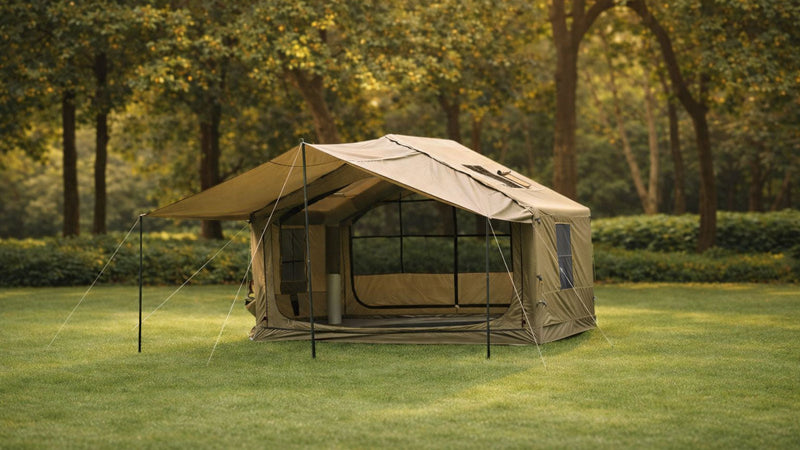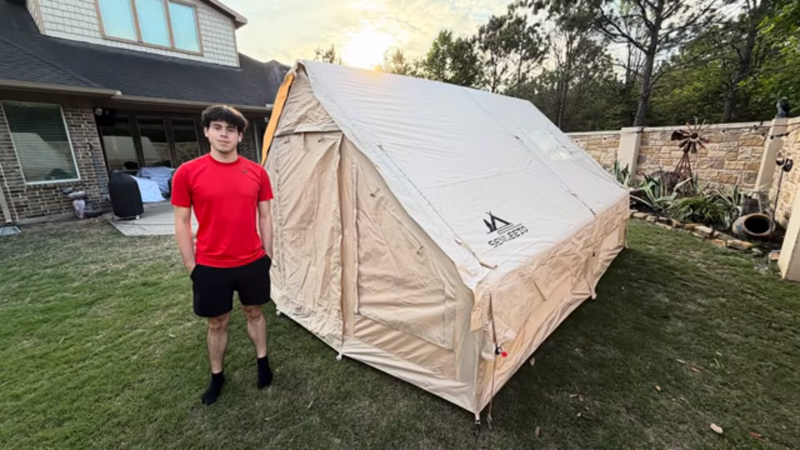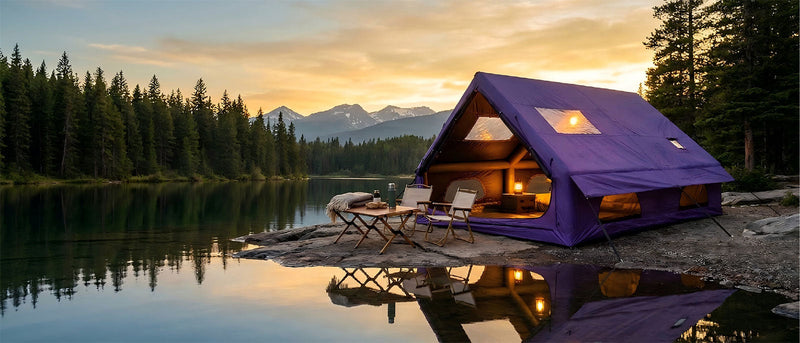

The quick version: A cabin-style inflatable tent gives you the interior feel of a small room — full standing height, vertical walls, real furniture space — with setup times under 10 minutes. It's the best base for glamping if you're car camping with a group or family and want a setup that's actually comfortable to spend three days in, not just sleep in.
The term "glamping" gets used for a lot of things. Sometimes it just means a nicer sleeping bag. But actual glamping — where the campsite feels like a place you want to hang around during the day, not just collapse into at night — requires a different kind of shelter.
That's what a cabin inflatable tent is for. Not every camping trip needs one. But if you're planning a weekend where the campsite is the destination, not just a place to sleep between hikes, this is worth understanding properly.
Cabin Inflatable Tent vs. Standard Dome Air Tent: What's Actually Different
Both types use air beams instead of poles. The difference is in the shape and what that means for how you use the space.
🔵 Standard Dome Air Tent
- Curved walls that slope from center to floor
- Good center height, limited usable floor area
- Compact footprint, easier to stake in tight sites
- Lighter overall
- Better for smaller groups (2–4 people)
- Faster deflation and pack-up
🟤 Cabin Inflatable Tent
- Vertical walls — full headroom to the edges
- Usable floor area matches the listed dimensions
- Fits furniture: chairs, tables, rugs, cots
- A-frame or ridge design with covered porch
- Better for larger groups or longer stays
- More interior zones — sleeping area + living area
The vertical wall design is the thing that changes how a tent feels day-to-day. In a dome tent, the usable space where you can stand or sit up is limited to the center. In a cabin tent, you have full headroom across most of the floor area — which is what makes it practical to set up furniture and actually use the space during the day.
The covered porch or vestibule area on most cabin designs also matters more than it sounds: it's where shoes, wet gear, and cooking equipment live, keeping the sleeping interior clean and organized across a multi-day trip.
Who a Cabin Inflatable Tent Is Actually For
Be honest about this before buying. Cabin tents are not for everyone.
| Good fit | Not the right tool |
|---|---|
| Family of 4–6 car camping for 2–4 nights | Solo or couple backpacking any distance |
| Groups who want a shared living space, not just individual sleep spaces | Anyone who needs to move fast between sites |
| Campsite-as-destination trips (lake, vineyard, private land) | Budget-first buyers — quality cabin tents cost more |
| People who camp in hot or cold weather and want seasonal features (AC port, stove jack) | Anyone with strict tent size limits (some campgrounds have them) |
| Anyone who spends time in the tent during the day, not just at night | Ultralight or minimalist campers |
Key Specs to Check on Any Cabin Inflatable Tent
Interior height at the walls, not just the peak
Most tents advertise center height. Cabin tents should have near-full height at the walls too, because the whole point is vertical walls. Ask for or check the wall height specifically — if a brand only lists center height, that's usually because the walls slope more than they're advertising.
A-frame porch vs. integrated vestibule
Some cabin inflatable tents have a front porch area created by the A-frame entrance — a covered outdoor space that's not counted in the interior square footage. This is genuinely useful for gear storage, cooking, and keeping mud out of the sleeping area. Others have a smaller integrated vestibule that's less usable. Check which type you're getting.
Fabric weight and waterproof rating
For a cabin-style tent that you're using as a glamping base over multiple days, 420D to 600D Oxford fabric with a 3,000mm+ waterproof rating is the target. The heavier fabric holds up better to extended use and repeated setup/breakdown cycles than lighter fabrics designed for occasional use.
Seasonal features built in
Cabin inflatable tents are typically used for longer trips — which means you're more likely to encounter variable weather. Check for: dedicated ventilation panels, a stove jack if you camp in fall/winter, and an AC port if you camp in hot climates. These can't be retrofitted.
Floor dimensions vs. sleeping capacity claim
Same rule as all tents: cut the capacity claim in half for comfortable sleeping with gear, or by one-third if you're also setting up furniture. A tent claiming 10-person capacity comfortably sleeps 5–6 and gives a family of 4 living space beyond just sleeping.
How to Set Up a Glamping Basecamp With a Cabin Inflatable Tent
Setup is fast. The basecamp layout is where most first-timers underplan. Here's a complete approach:
Site selection
Find level ground with slight drainage slope. Cabin tents have a larger footprint than domes — scout the area before committing. Clear sticks and rocks from the footprint. For an A-frame entrance, orient the porch toward your fire or view, not into prevailing wind.
Lay the groundsheet first
Slightly smaller than the tent floor so rain doesn't pool on it. This protects the floor fabric from abrasion and adds a moisture barrier. For glamping use, a thicker foam groundsheet under rugs adds insulation and makes the floor feel solid underfoot.
Stake corners and inflate
Stake the four corners first — this anchors the tent while you inflate and ensures the footprint is correctly positioned. Connect the pump, inflate until beams feel firm. Stake guy lines after inflation, tensioning from opposite corners to keep the structure square.
Interior layout: zones, not just sleeping
Think in two zones: sleeping area (one end) and living area (the other end or center). Air mattresses or cots along one side, low table and camp chairs in the other zone. A rug in the living area defines the space and keeps the floor warmer. Keep shoes and wet gear in the porch — not the sleeping zone.
Lighting makes the space
String lights inside the tent transform it after dark. Warm white over cool white — it reads as cozy, not clinical. A lantern on the table for functional light plus strings for ambiance is the standard glamping lighting setup. If your tent has skylights, use them: natural starlight costs nothing and beats any fixture.
Outdoor space: the porch area
The porch or covered entrance of a cabin tent is usable space. A folding table here for cooking and food prep keeps smells out of the sleeping area and gives you a functional outdoor kitchen. Two camp chairs facing outward from the entrance creates a natural gathering spot that doesn't require anyone to be inside or outside — it's the natural in-between.
Glamping Gear That Works Well With a Cabin Tent
💡 One packing tip that makes a real difference: bring a shoe rack or basket to keep at the porch entrance. It sounds minor but it's the difference between a tent that stays clean for three days and one that accumulates dirt from day one.
Senleeto Cabin Tent Options by Use Case
| Use Case | Model | Key Feature |
|---|---|---|
| Family glamping, summer | Grand Air Cabin | Blackout coating + AC port + 83" height |
| Year-round use including winter | Forest Air Cabin (600D) | Stove jack + heavier fabric for heat retention |
| Outdoor cinema / porch setup | Horizon Suite (4-in-1) | Detachable canopy, flat projection wall, modular setup |
| Couple or small group weekend trip | Air Cabin Lite (2–4 person) | Compact footprint, faster setup, lighter carry |
Ready to build your glamping setup?
All Senleeto cabin tents ship from US warehouses in NJ & CA. Free shipping.
Shop the Grand Air Cabin →Frequently Asked Questions
A cabin inflatable tent is a large-format air tent with vertical walls and a cabin-style footprint, rather than the curved dome shape of standard inflatable tents. The vertical walls maximize usable floor space and give full standing headroom near the edges, making them suitable for furniture, extended stays, and glamping setups where the interior is used during the day, not just for sleeping.
Family-size cabin inflatable tents typically range from 120 to 160+ square feet of floor space. The Senleeto Grand Air Cabin has a 157 × 118 inch footprint — that's about 128 square feet, enough for two queen air mattresses and a furniture area. Center height is 83 inches (nearly 7 feet), with vertical walls that maintain near-full height across most of the floor plan.
Yes, with the right model. You need a tent with a built-in stove jack for winter heating, and a heavier fabric (600D Oxford) for better insulation and durability. The Forest Air Cabin is specifically designed for this — the stove jack allows safe installation of a wood-burning tent stove, and the heavier fabric retains heat better than lighter options.
With an electric pump: 5–7 minutes from bag to standing. With a hand pump: 8–12 minutes. This is for a family-size cabin tent — the size doesn't add much time compared to a smaller air tent because the pump does the work regardless. First-time setup takes a little longer while you're learning the guy line pattern; after a few trips it's genuinely routine.
Yes — that's the main design point. The Senleeto Grand Air Cabin has 83 inches of center height with vertical walls that maintain near-full height to the edges. Adults up to 6'4" can stand fully upright throughout most of the interior. This is the feature that makes the biggest day-to-day difference on a multi-night glamping trip.
Practically: comfort, setup quality, and how much time you spend enjoying the location vs. managing your gear. Glamping typically involves a more deliberately set-up basecamp — a tent with real headroom and furniture, better sleeping arrangements, and attention to the outdoor living space around the tent. It's not about avoiding the outdoors; it's about spending more time in them comfortably.
Both. Light beige reflects more sunlight than dark colors, which helps keep the interior cooler during summer days. It also creates a warm, amber glow at night when lit from inside — which is where a lot of the glamping aesthetic comes from. That said, beige shows dirt more than darker colors and requires more cleaning attention after muddy trips.
Planning a cabin tent glamping trip? Tell us where you're headed in the comments.