
Spring weather in the US doesn't follow a schedule. You can wake up to sunshine in the Colorado Rockies and be dealing with sideways rain by early afternoon. Anyone who's camped in the Pacific Northwest in April knows that "partly cloudy" on the forecast means nothing.
Most tents make you pick: covered porch for the nice weather, or rainfly down for the storm. The Senleeto Grand Lodge Changeable Canopy Inflatable Tent removes that choice entirely. Here's how it works and who it's actually built for.
What "Changeable Canopy" Actually Means
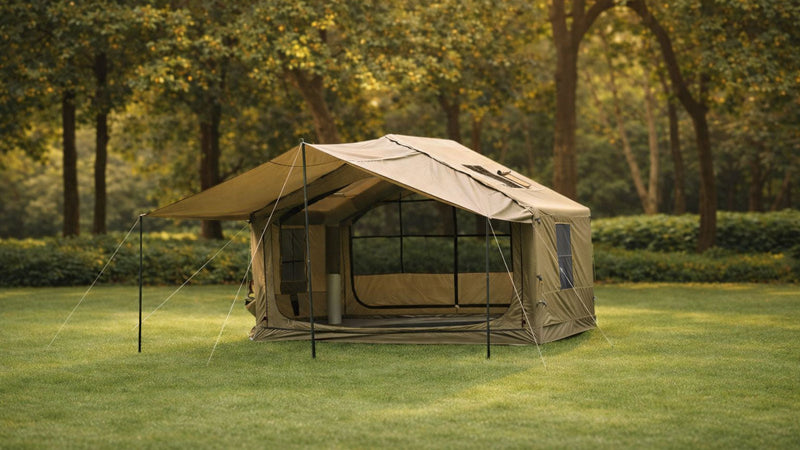
The canopy system on this tent has two distinct configurations — and switching between them takes under two minutes:
Awning Mode (Clear Weather)
Prop the front canopy up with the included poles and you get a covered outdoor room in front of the tent entrance. Big enough for camp chairs, a cooking table, and a few people sitting out. The deep black underside has a UPF 50+ blackout coating that blocks UV and dramatically reduces heat buildup underneath — so it's actually shaded, not just covered.
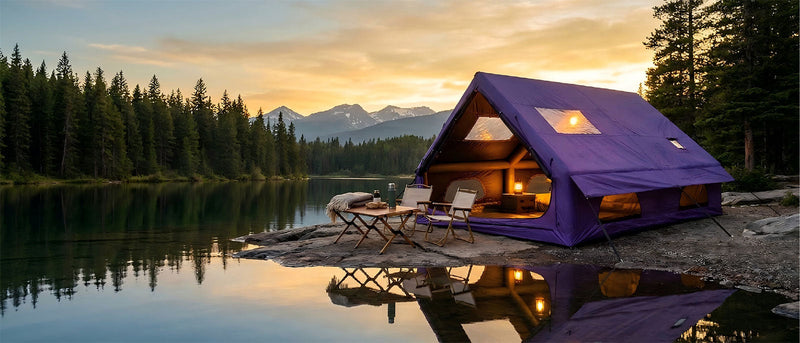
This is the setup for a California coast morning, a lake weekend afternoon, or any time you want to be outside without being in direct sun. It's also where the tent earns its glamping reputation — a proper covered porch changes how you use a campsite.

Rainfly Mode (Wet or Windy Weather)
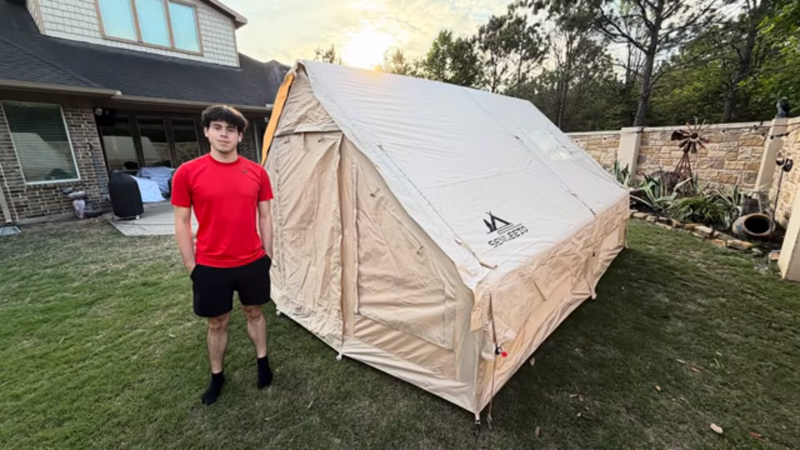
When conditions change, fold the canopy down and secure it. It locks into a full-coverage rainfly position that protects the entire tent body and entrance. No exposed seams, no partial coverage gaps where water finds a way in. The same blackout coating that blocks UV in awning mode now keeps the interior warmer and darker when sealed down.
The transition works in both directions — you're not committing to one setup for the whole trip.
Why This Matters for Spring and Summer Camping
Spring-to-summer is the most weather-variable camping window of the year. Here's how the canopy system maps to real conditions:
| Condition | Best Mode | What It Does |
|---|---|---|
| Hot sunny afternoon | Awning Mode | UPF 50+ shade, blocks heat buildup |
| Spring rain / thunderstorm | Rainfly Mode | Full-coverage weather protection |
| Cool morning / early sunrise | Rainfly Mode | Blackout interior, sleep past sunrise |
| Evening hangout | Awning Mode | Covered porch for camp chairs and dinner |
| Cold overnight (fall/winter) | Rainfly Mode + stove jack | Sealed warmth with wood-burning stove option |
The Tent Itself: Key Specs
The canopy system gets the headline, but the rest of the tent is what makes it worth the investment for a family camping season:
- Capacity: 8–10 person rating — realistic comfortable use for families of 4–6 with gear
- Interior height: 83 inches at center — full standing room for adults up to 6'5"
- Air beam setup: Heavy-duty PVC air columns, no poles to thread or snap
- Setup time: Under 10 minutes with the included pump
- Stove jack: Built-in fire-resistant vent for wood-burning stove use in fall and winter
- Fabric: Water-resistant Oxford fabric with reinforced seams
- Shipping: From US warehouses in NJ and CA — standard domestic delivery, no overseas wait
Who This Tent Is For
The changeable canopy system adds real value in specific situations. It matters most if:
- You camp in regions with variable weather — Pacific Northwest, mountain states, anywhere with afternoon thunderstorms in summer
- You spend time at the campsite during the day, not just sleeping — the covered porch is only worth having if you're going to use it
- You camp across multiple seasons — the stove jack and full rainfly make this usable from spring through late fall
- You're camping with kids who need a sheltered outdoor space between activities
If you camp one weekend a year in mild weather and sleep the whole time, a simpler tent covers your needs. This one is for people who want a basecamp that works across conditions without having to think about it.
Ready for whatever spring throws at you?
Ships from US warehouses. Free shipping on all orders.
Shop the Changeable Canopy Grand Lodge →Frequently Asked Questions
How long does it take to switch between awning and rainfly mode?
Under two minutes once you've done it once. Awning mode requires propping the canopy with the included poles and staking them out. Rainfly mode means folding the canopy down and securing the attachments. Most people figure out their preferred setup by day two of a trip and it becomes automatic.
Is the canopy waterproof when used as a rainfly?
Yes. The full-coverage rainfly position seals around the tent body and entrance. The Oxford fabric and reinforced seams are rated for sustained rain. The UPF 50+ coating on the underside is an additional layer that helps with both UV and moisture management when the canopy is in the extended awning position.
Can one person set this tent up alone?
Yes, for the main tent structure — stake the corners, connect the pump, inflate. The canopy awning setup (propping with poles and staking out) is easier with two people but doable solo. Most families set up together in about 10 minutes total.
Does this tent work for hot summer camping in places like Texas or Arizona?
The UPF 50+ awning significantly reduces heat under the covered porch area and blocks early morning sun from the interior. For interior temperature management in serious desert heat, pair it with a portable outdoor AC unit — this tent has a built-in stove jack but check the specific variant for AC port availability.
What is the stove jack for?
The stove jack is a fire-resistant vent built into the tent fabric for safely running a wood-burning tent stove inside. Thread the stovepipe through the jack opening, keep a vent cracked for airflow, and you have real heat for fall and winter camping. Always use a CO detector when running any stove inside an enclosed shelter.
How is this different from a standard inflatable tent with a rainfly?
Most inflatable tents with rainflies have a fixed rainfly — it's either on or off. The changeable canopy here functions as both a structural awning (propped up with poles to create usable covered outdoor space) and a sealed rainfly (folded down for full weather protection). You're getting two distinct setups from one component, which is what makes the "changeable" designation meaningful rather than just marketing.
Camping somewhere with unpredictable weather this spring? Tell us where in the comments.