

Which air tent fits yourtrips?
Same air-beam frame, three shapes. Compare honest capacity, footprint and features — where a spec isn't verified yet, we show "—" instead of a guess.
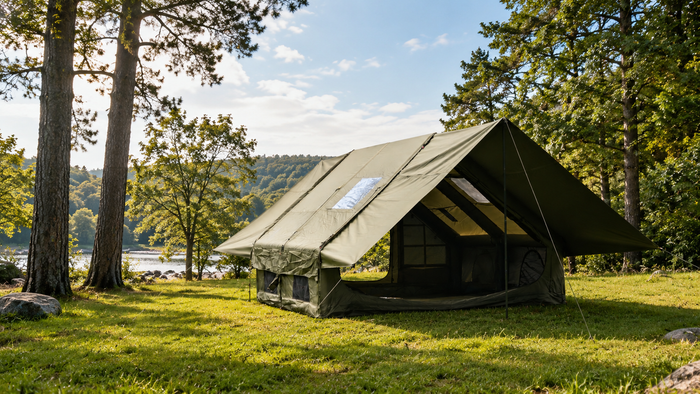
Cabin
Vertical walls and standing headroom through the middle — the shape that fits cots, chairs and a table.
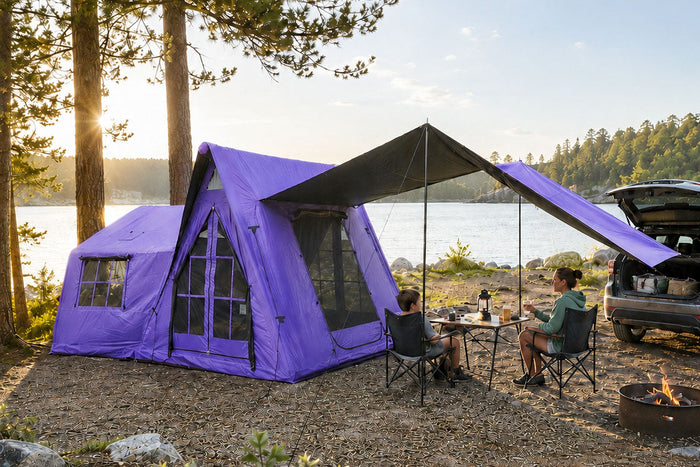
A-Frame
Sloped walls that help shed light rain when properly pitched and tensioned, with a classic peaked profile.
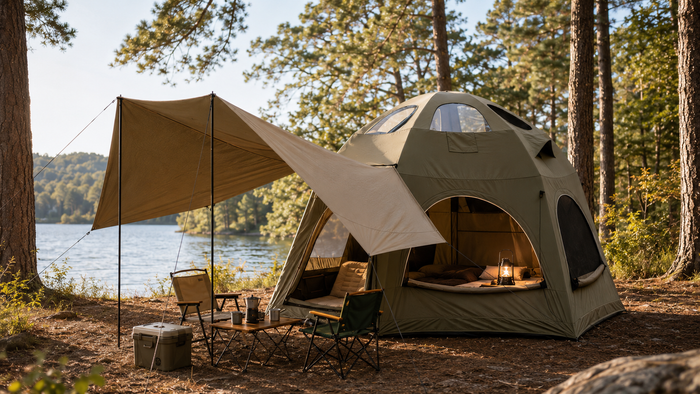
Dome
Hexagonal base and skylight panels for wide, open views from inside.
The honest spec sheet
Where a spec isn't verified yet we show "—" instead of a guess.
Max capacity is not comfort
"Sleeps 8–10" means wall-to-wall pads. The comfortable number keeps room for bags, boots and an aisle — we show both, honestly.
Shop Cabin
Shop A-Frame
Shop Dome
Skip the specs, start here
Quick weekend trips
Fast to pitch and pack, and small enough to live in the trunk between trips.
Go with A-FrameA week with the kids
Room to stand, store gear and keep an aisle so nobody crawls over anyone.
Go with CabinHot-tent camping
Look for a stove jack and plan for ventilation — check each model's spec before you buy.
Check stove jack modelsWide open outlooks
Skylight panels put the view overhead instead of through a door flap.
Go with DomeComparing questions
Wall angle. Cabin walls are near-vertical, so the floor area you see is the floor area you can stand in. A-Frame walls slope, which trades some usable width for a peaked profile. Dome uses a hexagonal base with skylight panels. All three use the same air-beam frame.
Yes. The frame is part of the tent, so a larger shelter goes up the same way a smaller one does — unroll, stake the corners, and pump to the marked pressure.
Because that figure has not been verified against the production spec yet. We would rather show nothing than a number that turns out to be wrong.
Still torn between two?
Start from the trip you take most often — or ask us, we camp in these ourselves.